Lita Slatton loves telling this celebrity stop-in story about when The Beatles’ Paul McCartney rolled into Painted Desert Indian Center, a longtime Route 66 outpost in Holbrook, Arizona. Turquoise, teepees and towering dinosaurs have made memorable impressions on many road-trippers — and at least one rock legend.
“He came in and I said, ‘You look like Paul McCartney!’” relates Slatton, who runs the family business with her husband, Freddie.
It was 2008 and McCartney was making the Route 66 trek for his 66th birthday. And while certainly an epic encounter in Slatton’s book, it’s one of many storied visits from artists like country music chart-topper Chris Stapleton, along with everyday travelers and tourists.
Painted Desert’s expansive inventory of authentic Native American and inspired gifts offers something for everybody. Price points range from 50 cents to $25,000.
As for product trend? The one thing Slatton can pinpoint is that most expect to buy nothing when they drop in. Then they find something.
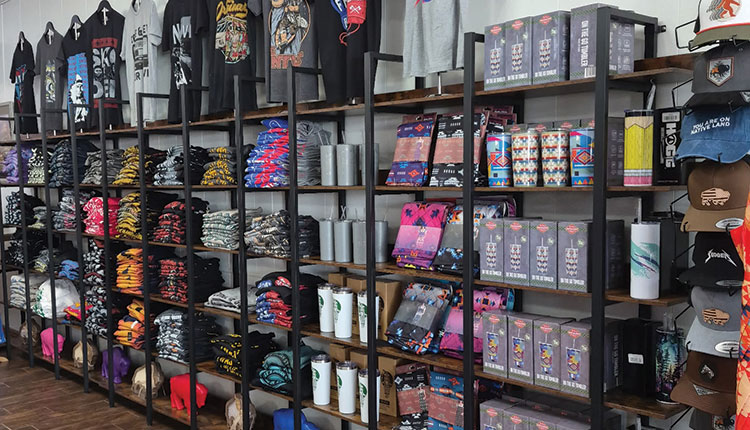
Native American patterns can be found on drinkware and dresses at McKee’s Indian Store.
“Many just come in to use the bathroom,” Slatton quips, quite proud of the restrooms’ hand-painted tiles, a collaboration with R.C. Gorman, a Navajo Nation member known as the Picasso of American Indian Art.
Then, guests meander around the 4,000-square-foot store and find “a saddle for every seat,” from pottery to toy tomahawks and everything in between, she says.
The common thread across souvenir shops specializing in Native American products is family tradition, unexpected finds and gifts that become storytelling pieces.
Slatton says, “That’s my favorite thing. There are those few who have been looking for a bowl or squash blossom for years and we can fulfill their needs because we have the inventory here. And there are most who purchase something on impulse.”
Not a lost art
Long before Sedona, Arizona, became a premier destination for Southwestern shopping, the late Joe Wilcox was building relationships with Native American artists. What began as a small jewelry operation grew into a collection of stores that helped shape Uptown Sedona’s retail landscape for decades.
Now the Joe Wilcox name lives on at a headliner location that opened after his passing, shares his daughter, Pam Freeman, who is carrying on the legacy.
Overseeing Joe Wilcox Indian Den means nurturing generations-long relationships with Native American artists and providing a retail mix that appeals to locals and tourists looking for something quintessentially Southwest.
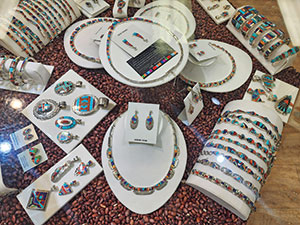
Jewelry is a top category, and it is merchandised by color and type. Authentic jewelry is displayed in glass cases with coordinated earrings, necklaces, bracelets. “This makes it easy to find a set,” Freeman says.
For McKee’s Indian Store’s owner Liz Stephens, Native art and culture are more than a business. A member of the Caddo Nation, Stephens has spent a lifetime immersed in the traditions that define Anadarko.
Stephens partners with a variety of indigenous artists, including Traci Rabbit’s selection of authentic works.
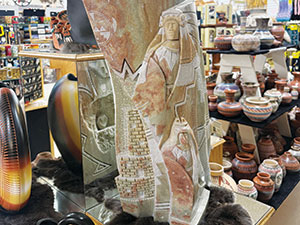
One-of-a-kind statues and indigenous pottery are favorites at the Painted Desert Indian Center.
At McKee’s, iconic Pendleton wool products have long held their appeal and fill a dedicated space, alongside the store’s selection of gabardine, broadcloth and traditional cotton fabrics used in regalia. So does the adjoining Susan Peters Gallery, which adds another dimension to the McKee’s experience. Named for the influential educator and Native art advocate who helped nurture generations of indigenous artists, the gallery showcases fine art ranging from paintings and sculptures to pottery and traditional works.
These are the Native American souvenirs and gifts consumers crave and are willing to push the budget to take home.
Some customers visiting the area are looking for a souvenir that’s inspired by the region and Native American culture, and items inspired by the culture offer an “in” to taking home a gift that would be out of reach if it was authentic.
This is why Painted Desert Indian Center works with some importers for bow-and-arrow toys, dream catchers and tomahawks. A supplier in Mexico provides truckloads of blankets. Available in one size, they can fit a full-size bed.
Slatton says, “I have so many people tell me they make curtains for their cabins out of them.”
And at Joe Wilcox Indian Den, Freeman dedicates part of the store to gifts and souvenirs. It’s all about making sure tourists and customers can find what they want.
“We strive to provide great customer service and a great selection of merchandise,” says Freeman, relating that the Southwest theme threads through categories for the most part. “We also carry home decor, kitchen items, food products, soaps and lotions, wind chimes, purses, kids’ items and souvenirs,” she says.
Built on relationships
Relationships are central to acquiring authentic Native American products, and those transactions are built on years of trust and personal visits.
“The artists we represent have gotten to know Freddie and if they like someone, they’ll come back and do business again,” says Slatton. “That’s the way it is. And we know that here in Holbrook, whether you’re a car salesman or a shop owner, if you lose your Indian trade, you’ve lost a lot.”
At Joe Wilcox Indian Den, Native American art offerings include traditional fetish carvings — small, hand-carved animal figures, often crafted from stone. Artists visit the shop, and longtime relationships inform buying. Freeman says, “We have people we’ve been buying from for 30 years. We trust them and they deliver high-quality pieces.”
From a showstopper selection of Native American dance shawls to scarf slides and embroidered ties for men, McKee’s also invests in its fabric department and relies on Native American artisans who provide products to the shop.
And tight-knit relationships extend to the team at McKee’s. “We have all Native American staff, and they are local to this area and members of some of the surrounding tribes,” says Stephens.
Combining culture and business is what Stephens cherishes the most about McKee’s. “This is not only a business, it’s a future for our people,” she relates. “My children will one day benefit from us having this. It’s fulfilling a legacy.”