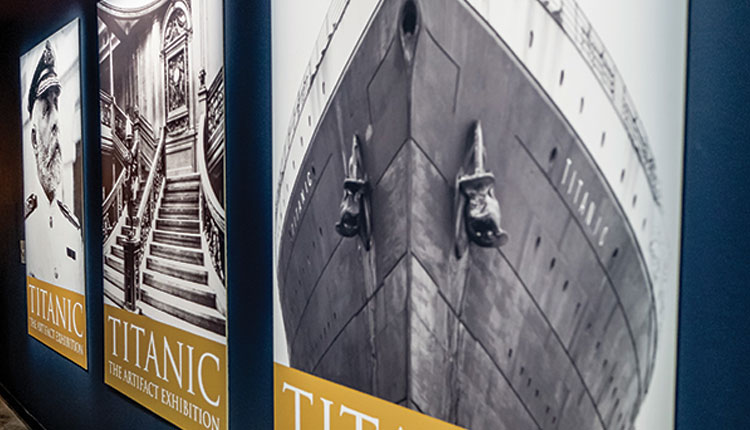
When TITANIC: The Artifact Exhibition opened at Great Lakes Science Center in Cleveland this spring, guests stepped into one of history’s most recognizable stories through recovered artifacts, immersive technology and life-size recreations of spaces aboard the Ship of Dreams.
But behind the scenes, another large-scale operation was unfolding: the creation of a fully dedicated retail environment designed to extend the visitor experience long after guests left the galleries.
“There are a lot of moving parts,” says Amanda DeSena, store director at Great Lakes Science Center.
“There are exhibits, construction, retail, curators, security — all the things. Cross-collaboration and coordination have been key to manage the compression of time when a lot of major events are happening at the science center.”
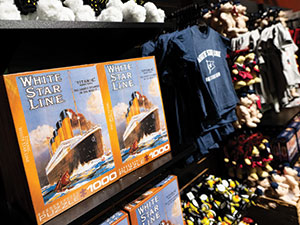
Puzzles, apparel and plush are among the many specialty Titanic-themed merchandise.
The blockbuster exhibition, running May 21, 2026, to Jan. 18, 2027, marks the third time in the science center’s 30-year history that it has hosted a Titanic exhibition. This iteration includes more than 200 authentic recovered artifacts, immersive galleries, a new virtual reality experience and a dedicated Titanic retail store built directly into the exhibition exit experience.
For museum leadership, retail was never viewed as an afterthought. It’s every bit a part of the iconic experience.
“When we bring in exhibits, we look at all of the revenue streams through retail, audio tours and other experiences,” says Amanda Taunt, vice president of operations at Great Lakes Science Center. “Retail is a significant portion.”
Building a second store
The Titanic exhibition occupies roughly 13,000 square feet inside the Science Center’s traveling exhibition space. Within that footprint, construction crews transformed part of the gallery into an enclosed retail environment that functions as a standalone store.
The temporary space required walls, fixtures, cabinetry and flexible merchandising elements that could support changing inventory and guest flow throughout the exhibition’s run.
“They are making one traveling exhibit hall into multiple rooms,” DeSena explains, relating that the shop measures 841 square feet. It’s a significant temporary footprint designed specifically for exhibition traffic.
Fixtures throughout the space were built for flexibility, including movable wall systems, tables and display cabinets mounted on wheels to allow adjustments as needed.
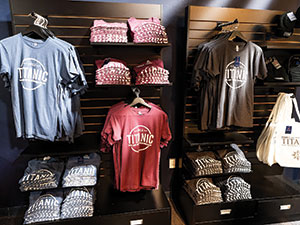
Many of the items inside the shop were designed specifically for the exhibit.
At the same time, Great Lakes Science Center continued operating its permanent 2,200-square-foot Science Store upstairs, effectively managing dual retail operations under one roof.
Operationally, Taunt says the project required close coordination between the Science Center, experiential exhibition company (EM Group) and retail partner Event Network.
“They work with our buyers to look at what is available and tailor those items for retail that we know will do well based on what we see typically in the museum and what we’ve seen in other locations,” she says.
Curating the story
The merchandise mix was designed to mirror the emotional and educational arc of the exhibition. Guests move through galleries exploring the construction of Titanic, recreated passenger spaces, the boiler room, the iceberg collision and memorial areas before exiting directly into retail.
A forced exit through the dedicated retail space is intentional.
“There’s definitely science behind the forced exit through the shop, and you can typically convert that into a sale,” DeSena says.
The product assortment includes souvenirs, plush, apparel, books and exhibit-specific collectibles designed to appeal to multiple generations of visitors. Some of the most distinctive products tie directly to artifacts and spaces featured inside the exhibition.
“One of the things I was really excited to see is some of the dishware — recreations of dishes that were used in the first-class dining room and in third class,” says Taunt.
Exhibit-exclusive merchandise also plays an important role in the retail strategy.
That exclusivity helps transform the store into an extension of the experience rather than simply a traditional museum exit shop.
“You can only get these gifts when you are in this specific exhibit,” Taunt says.
Timing the voyage
Executing the project required an intense installation timeline complicated by overlapping seasonal activity at the Science Center.
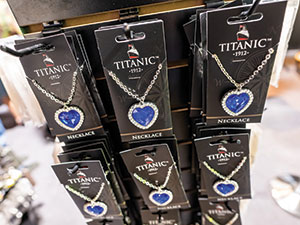
Customers can purchase their own “Heart of the Ocean” necklace made popular by the movie, Titanic.
“This is literally just-in-time,” DeSena says. “We knew it will drive a lot of anticipation and attendance, and we want to make sure everything is done exactly right.”
As trucks carrying exhibit infrastructure and merchandise arrived at the loading dock in May, just a couple of weeks before the VIP grand opening, retail teams simultaneously prepared systems, staffing and inventory management processes behind the scenes.
DeSena estimated roughly 4,000 individual merchandise pieces were received, entered into the museum’s software systems and labeled before opening the shop.
At the same time, the science center was balancing community programming surrounding USS Cleveland and staffing preparation heading into the summer tourism season.
Specialized handling protocols added another layer of coordination.
According to DeSena, only designated RMS Titanic personnel were permitted to handle certain incoming pallets tied to the exhibition. Truck drivers could open trailers, but unloading and documentation procedures remained tightly controlled for security and insurance purposes.
“It really is like running a whole other operation,” Taunt says.
Extending the experience
Before the opening, anticipation surrounding the exhibition was shaping expectations for retail performance.
“I’ve always known people were into Titanic,” DeSena says. “But the amount of stuff they are buying in the store is just mind-blowing.”
DeSena and Event Network, which operates The Science Store, worked alongside other Titanic exhibit destinations that had already opened and closed the show and shop. Specifically, she connected with a store director at the Oregon Museum of Science and Industry, which opened its Titanic exhibition two months prior.
The Oregon museum store staff was surprised at the amount of merchandise sold during the exhibition and suggested stocking up.
That level of demand reflects Titanic’s cultural fascination more than a century after the ship’s maiden voyage.
The store represents something more personal: a final chance to take a part of the story home. DeSena says, “Visitors will not find this merchandise anywhere else, which makes the retail experience even more valuable.”