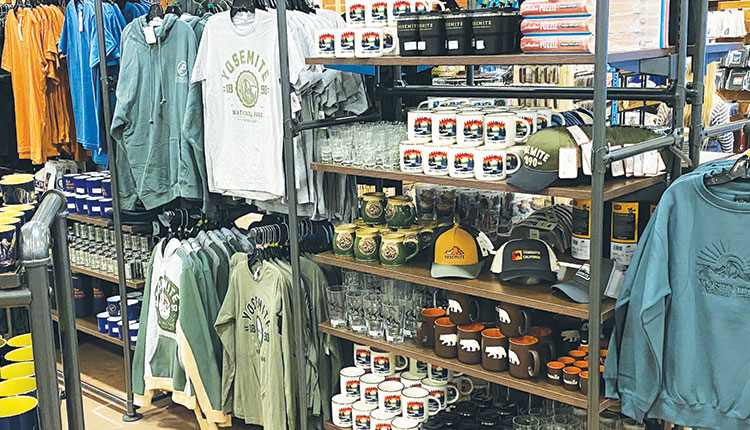
Travel-sized souvenirs like stickers and magnets go over big with visitors to park stores, along with some unique products made locally or that prioritize sustainability.
America’s national and state parks continue to dominate as popular tourist destinations this year, with people wanting to escape to these beautiful landscapes. The U.S. National Park Service reports that over 323 million people visited national parks in 2025, with 26 parks setting visitation records. Interest in state parks is also up, with an estimated 867 million people visiting the nation’s 9,800-plus state parks every year, according to the National Association of State Park Directors’ website.
Retailers at national and state parks alike have noticed growing visitation levels in their stores in recent years. Patty Ressler, executive director of the Black Hills Parks & Forests Association, says she has seen more families frequent the association’s partner parks and grasslands across South Dakota, Nebraska and Wyoming lately.
“The Black Hills has traditionally been a very family-oriented place for visitation. It’s a very economical place for families to come and visit,” she explains. “But lately, we’re seeing a lot more intergenerational visits.
We’ve also seen an uptick in the off-season traveler as well, so our peak season is extending with more families traveling during spring break and later in the season.”
The changing visitation has also meant changing interest in souvenirs offered at the park stores.
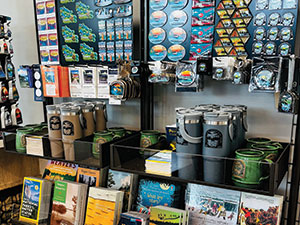 Name-drop magnets and relevant books are popular keepsakes at the Voyageurs National Park stores. “Since COVID, things have changed a little in terms of items people are looking for and their expectations when they go to a public lands site,” says Ressler, who shares that people often want site-specific and trend-focused souvenirs to take home. “We’ve tried to be really responsive to those changes, and I feel like we’re accomplishing that feat.”
With its cool cave environment, hoodies are always big at the Wind Cave National Park store in the Black Hills. When Ressler found out more customers were interested in zip-up hoodies, she decided to invest in offering some custom zip-up hoodie options at two of the association’s partner cave locations this year.
She adds, “Always listen to your visitors, and be responsive to what people are looking for. That’s the biggest advice I can give.”
Staple souvenirsStickers are particularly big sellers for many park retailers lately — they’re great to collect and easy for hikers to place on their water bottles or cars during their visit.
“Stickers are huge,” says Ressler, adding that customers are also drawn to magnets, postcards, pins and hiking medallions. “Those kinds of things are primary drivers — the small stuff.”
Rick Trigg, director of retail with the Jefferson National Parks Association for the four retail stores within Voyageurs National Park in International Falls, Minnesota, has also noticed a rising interest in stickers.
“In addition to apparel, magnets and keychains, stickers have been very popular the last few years,” he says. “Custom sticker designs of the park are highly sought after to the extent that we have a tabletop spinner rack of stickers at each store location.”
Night sky motifs also drive souvenir trends at Voyageurs National Park stores.
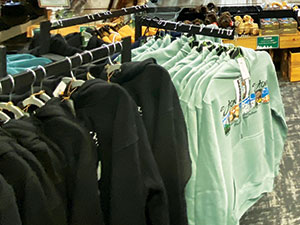 Name-drop hoodies serve as a practical souvenir to keep guests warm when visiting Wind Cave National Park. “We have had a lot of success the last few summers selling items that are night sky themed, whether it’s a guidebook on how to identify the stars, night-sky-themed apparel, socks, drinkware or artistic night-sky-themed postcards or posters,” says Trigg.
T-shirts are key souvenir drivers for Yosemite Hospitality’s stores at Yosemite National Park in Yosemite Valley, California. Regional Senior Retail Buyer Kym Wright tries to make sure T-shirts featured across the concessionaire’s stores are made of high-quality materials or come from popular brands such as Parks Project.
“Soft shirts and sweatshirts and scuba fabric is something everyone is getting into,” says Wright. “People look at that and say, ‘that’s what I have at home — that’s what I love living in.’”
Destination-specific souvenirs are also big for many park retailers. Libby Bloomquist, sustainable commerce director for the PA Wilds Center for Entrepreneurship, says changing out designs on T-shirts, mugs and magnets with different destination-specific themes is important at PA Wilds’ three park stores across northwestern Pennsylvania.
“Since some of our guests visit season after season and year after year, we are always trying to keep our assortment fresh and exciting by adding in new products, designs and colors,” Bloomquist explains. “Based on customer feedback, we are working on new designs that reflect destination-specific themes such as Kinzua Bridge State Park and the Skywalk, Leonard Harrison State Park and the PA Grand Canyon as well as items with historical significance. Providing an assortment of products to accommodate different ages and budgets allows all visitors to take home a piece of the PA Wilds.”
Native to natureInterpretation is important to the mission for many park retailers, ensuring all souvenirs are truthful to the destinations that they represent.
California might feature a grizzly bear on its state flag, but because these bears are not native to the state or Yosemite, Wright says she does not feature grizzly bears in her stores.
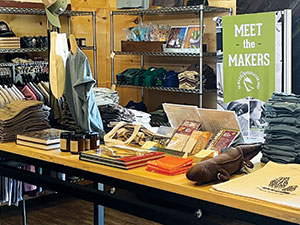 PA Wilds invites guests to meet the makers of some souvenirs and keepsakes at a display table in its Marienville Conservation Shop. “The confusion is California’s state animal is the grizzly bear, yet grizzly bears are no longer indigenous to California,” she explains. “But we have black bears in Yosemite. So my focus is on black bears because that’s the animal people hope to see in Yosemite, as well as coyote. I’m always trying to focus on what is part of the park.”
Wright says some of the Yosemite Hospitality stores recently started to carry socks from Conscious Step that feature designs of animals that are native to Yosemite.
Since the Red Lake Nation Ojibwe Tribe is native to northern Minnesota, Trigg says Native American food items go over big at the Voyageurs stores.
“People have a tendency to buy Native American food items, such as wild rice pancake mix, and syrups made by the Red Lake Nation Ojibwe Tribe that is local to the park,” he says. “We also sell an Ojibwe card game.”
Customers visiting PA Wilds Conservation Shops also enjoy plush toys representing the Hellbender, which is the official state amphibian of Pennsylvania.
“The Hellbender, represented by Ellen Paquette in a life-size plushie, brings awareness to this endangered species,” says Bloomquist, who sources this plush from a local vendor.
She adds that PA Wilds sources its souvenirs from local vendors as much as it can for its three conservation shops. While the organization sources from some nationally established and reputable vendors, Bloomquist says PA Wilds sources the vast majority of its products from vendors in and around Pennsylvania.
“PA Wilds Conservation Shops source 90% of products from members of the PA Wilds Cooperative network, which is free to join and includes hundreds of businesses and organizations rooted in the PA Wilds region,” she shares. “The fact that visitors can purchase products both inspired by and made in the region appeals to many shoppers at our stores because they know that the gifts are not only authentic to the place but create an economic impact by supporting family-sustaining jobs in our communities.”
Sustainability standardsPark retailers also want to provide customers with souvenirs that are either sustainably made or give back to nature in some way.
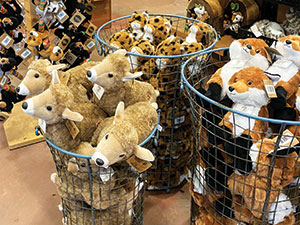 Customers can pick plush native to Yosemite National Park when visiting a Yosemite Hospitality store. Wright prioritizes stocking products that reflect conservation values, low-impact living and eco-conscious design, and her team at Yosemite Hospitality received a Sustainability Award at The Gathering last fall for having a strong commitment to environmental stewardship.
“We work really hard on reducing the amount of single-use plastic in the stores and switching to compostable materials, aluminum and glass,” says Wright.
As an example, Yosemite Hospitality touts that its reusable tote bags from Belvedere both reduce reliance on single-use plastic bags while also serving as souvenirs. Wright says her stores have also recently added Turkish towels from Shaka Love, which is an environmentally focused company that donates proceeds to help the planet.
Bloomquist says there’s no shortage of eco-friendly products at PA Wilds Conservation Shops. She shares that Jabebo Earrings of Bellefonte, Pennsylvania, are growing in popularity, with people drawn to these nature-inspired earrings made from recycled cereal boxes.
Customers also appreciate the shops’ personal care and household items from Blackberry and Sage Market and handmade soaps from Nonni & Papa Joe’s Homestead that are made from natural ingredients. Local artist Bob Wilberding also supplies the conservation shops with ornaments made from reclaimed barn wood and painted with native bird species.
Ressler says she also focuses on finding vendors that give back to the parks whenever possible, and she also tries to use vendors that are closer to the parks to reduce emissions when transporting products to the park stores. She says, “My goal is to have the smallest environmental footprint possible. We try to work as locally as we can with as few vendors as we can.”
Encouraging discoveryWhen trying to find new vendors for park stores, these retailers often turn to trade shows, customer feedback and employee suggestions for inspiration.
Wright adds that her employees are also very helpful in promoting new products to customers browsing Yosemite Hospitality’s stores. With anywhere between 100 to 300 staff members working at Yosemite Hospitality stores, Wright says educating all staff members on the meaning behind some of the souvenirs and products is important to improving guest experience.
“The more information you give to your staff, the more engaged they become with the guests,” she says, explaining that she will sometimes share samples from trade shows with staff members to educate them on things she’s bringing in. “Your frontline staff can really make a difference in how people walk out the door of the store and whether they’ll come back.”
Ressler says her stores also have rotating seasonal staff members, so educating them on the souvenirs and products in the stores and key details about the parks themselves help to ensure better guest services.
“We’re not just selling products — we’re here to help answer visitor questions,” she says. “A lot of time, people will ask us, ‘Where should I go next at the park?’ We’re careful to make sure our team members are all trained properly to answer questions and provide accurate information.”
|