Putting a spotlight on sustainable and conservation-focused souvenirs can win over customers while also helping the environment and others.
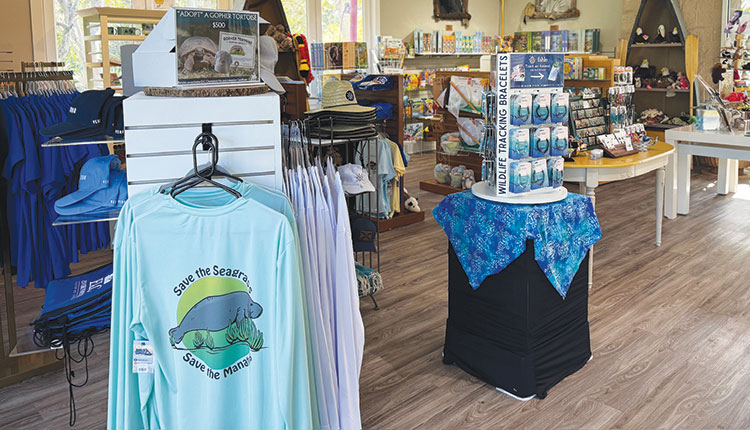
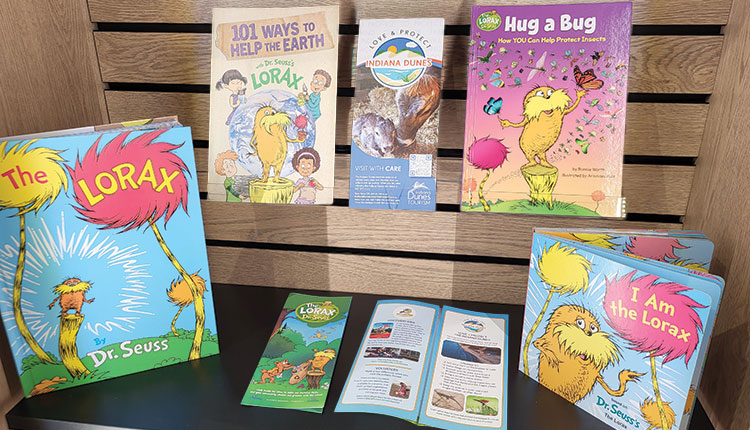
When Beaches & Beyond opened a souvenir store inside the Indiana Dunes Visitor Center several years ago, both conservation and sustainability tied into much of the merchandise.
“Our store is run by Indiana Dunes Tourism,” says Retail Director Linda Palko. “Our organization is passionate about sustainability. Everyone who works for Indiana Dunes Tourism cares about protecting the area, doing things the right way and doing that with the merchandise we carry, too.”
Palko says she has focused on finding eco-friendly and locally made gifts and souvenirs for the visitor center gift shop. Some products tie to both those aspects, such as apparel from Me O My Earth.
“They make fabric using recycled plastic bottles,” she says. “I’m also pursuing a company that makes beach blankets 100% made from recycled fabrics.”
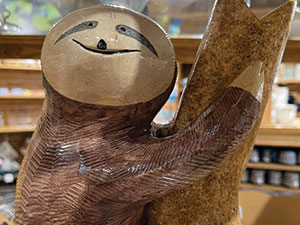 Wood-crafted animal figurines are popular souvenirs at the Saint Louis Zoo, with plenty of animal design options to choose from, including sloths, turtles and giraffes. Knowing that many visitors bring their dogs to the park, Palko says the store also carries dog leashes made from recycled bike tubes from Cycle Dog.
And to help customers to better understand the Great Lakes, Beaches & Beyond carries socks from GeoSox that feature the surficial geology map of the Dunes area to educate visitors about geology in a fun way. Palko says the store recently began selling 1,000-piece puzzles from GeoSox that educate and entertain people on the water basin, with proceeds from those sales going to Sea Grant.
“Not everybody gets to live near something like the Indiana Dunes and the lake,” Palko adds. “We see every day how important it is to protect nature and take care of it and do things the right way. We want these types of areas and nature to be here for generations to come.”
To be sure, many destination retailers at parks and zoos share a common interest in carrying conservation-focused and sustainable souvenirs given that these attractions often have missions focused on protecting the land and animals on-site. But Palko says she has seen interest in sustainably made goods rise across the board.
Prior to her time at Beaches & Beyond with Indiana Dunes Tourism, Palko worked for many years at a major big-box retailer, where she noticed an increase in customers expressing interest in eco-friendly products.
“As each year went by, more people were concerned with finding bamboo or wood instead of Teflon-coated utensils,” she recalls.
Regardless of the destination or attraction, more customers factor conservation and sustainability into their purchases. For those passionate about it, they seek souvenirs that both delight and do good.
Considering sustainable optionsThe Saint Louis Zoo actively considers ways to incorporate both conservation-focused and sustainable souvenirs into its two gift shops on-site.
Retail Manager Tommy Brown says he looks at three criteria when adding conservation-focused souvenirs. “When purchasing conservation items, one must look at the materials used, the impact on the ecosystems and treatment of the people,” he says.
Some sustainable and conservation-focused brands are known top sellers at Saint Louis Zoo’s stores. A big one is wood-crafted animal figurines from companies like EarthView or Stoneage Arts, with both companies passionate about the environment. SS Handcrafted also has a conservation element, giving back to The Turtleman Foundation in support of sea turtles.
“Rocks are about as green as you can get, as long as they are processed naturally and don’t have harsh chemical dyes,” explains Brown.
The zoo has also partnered with some conservation- minded vendors. In 2018, Brown says the Saint Louis Zoo partnered with Stoneage Arts to develop a high-end stone cellphone holder shaped like a giraffe.
“We wanted to develop a product that would both sell and be useful, too,” he shares. “Some people don’t just want another tchotchke — they want something they can actually utilize.”
With all products, Brown adds that it’s important to consider eco-friendly alternative options. He says products with the Certified B Corp label are almost always sustainably made.
“Conservation means using without destroying or depleting resources, and many stores should strive for that in their purchasing habits,” Brown says. “Look for alternative things to buy instead of buying items that directly harm and deplete resources.”
Finding natural fitsConservation-focused souvenirs are a natural fit at The Nature Nook boutique at the Environmental Learning Center in Vero Beach, Florida. Located on Wabasso Island, the Environmental Learning Center is a 64-acre nature preserve and education center in the middle of the Indian River Lagoon, featuring playscapes, aquariums, walking trails, camps and pontoon trips. All the store’s merchandise relates in some way to wildlife and nature found in Florida, focusing on native and environmentally friendly products.
“We try to look at environmentally friendly products, especially products that are made locally,” says Cheryl George, guest services manager at the Environmental Learning Center. “As an organization, we do our best to protect what we love and stay away from single-use plastic and other harmful materials as much as possible.”
With many people coming to the center to take a pontoon boat ride or kayak in the lagoon, George says she stocks some eco-friendly beach essentials in the store. She adds that one popular brand is Florida Glow, which has reef-friendly sunscreen products.
Customers also enjoy eco-friendly apparel and jewelry at The Nature Nook. George says she recently added UPF 50 sun-protection T-shirts from Mang Apparel, which the center works with to support wildlife conservation efforts. She adds that Ja Bebo earrings made of recycled cereal boxes also sell well for the store.
Plush from Wild Republic and Aurora are big toy sellers for The Nature Nook, and George says all of these plushies feature animals that can be found in Florida.
Similarly, when the store added Fahlo bracelets last year, she ensured that the store only stocked ones that track animals native to Florida, such as dolphins, manatees, sharks and sea turtles.
“We don’t want to carry anything animal-wise that can’t be found here in the state of Florida,” says George. “It doesn’t necessarily have to be found in this lagoon, but it’s got to represent what we have here on the island.”
Making a statementFor conservation-focused retailers, sustainability is seldom an afterthought hidden in the back of the store. It’s often brought front and center in ways customers won’t forget.
One way to connect customers to sustainable souvenirs is to share stories about those products, through marketing and in-store promotions.
“People love stories, and they want to be a part of a good story,” says Brown. “If you can tell the story of the products through signs, QR codes, social media or by word of mouth, you will create interest in your products.”
Up in the front of The Nature Nook, George says she features a table that highlights different conservation themes every month, engaging customers in the story behind these eco-conscious finds.
Beaches & Beyond also highlights products that do good up front in the store to pique customers’ interest, changing themes throughout the year. And outside of the store, Palko says the Indiana Dunes Tourism organization has promoted conservation efforts through events and marketing campaigns.
“Sometimes we can’t do the big things to make an impact, but we can do small things, whether it’s the products we sell or the messaging on what we can do,” says Palko. “It’s good to feel that you can do something — the little things all add up to big things.”
|